Attention Training

Schulte Tables

A proven tool for developing attention and speed reading

Everything about Schulte tables: history, benefits, techniques and age recommendations for effective training

5×5 · Standard grid size

Find the numbers in order

5 × 5·1–25

Next
1
Time
00:00.0
Mistakes
0
Pick a size, press Start and find the numbers in order, starting from 1. Keep your eyes on the centre of the table.

Real screens

The Schulte table inside the platform

A working trainer with a timer and a scored result

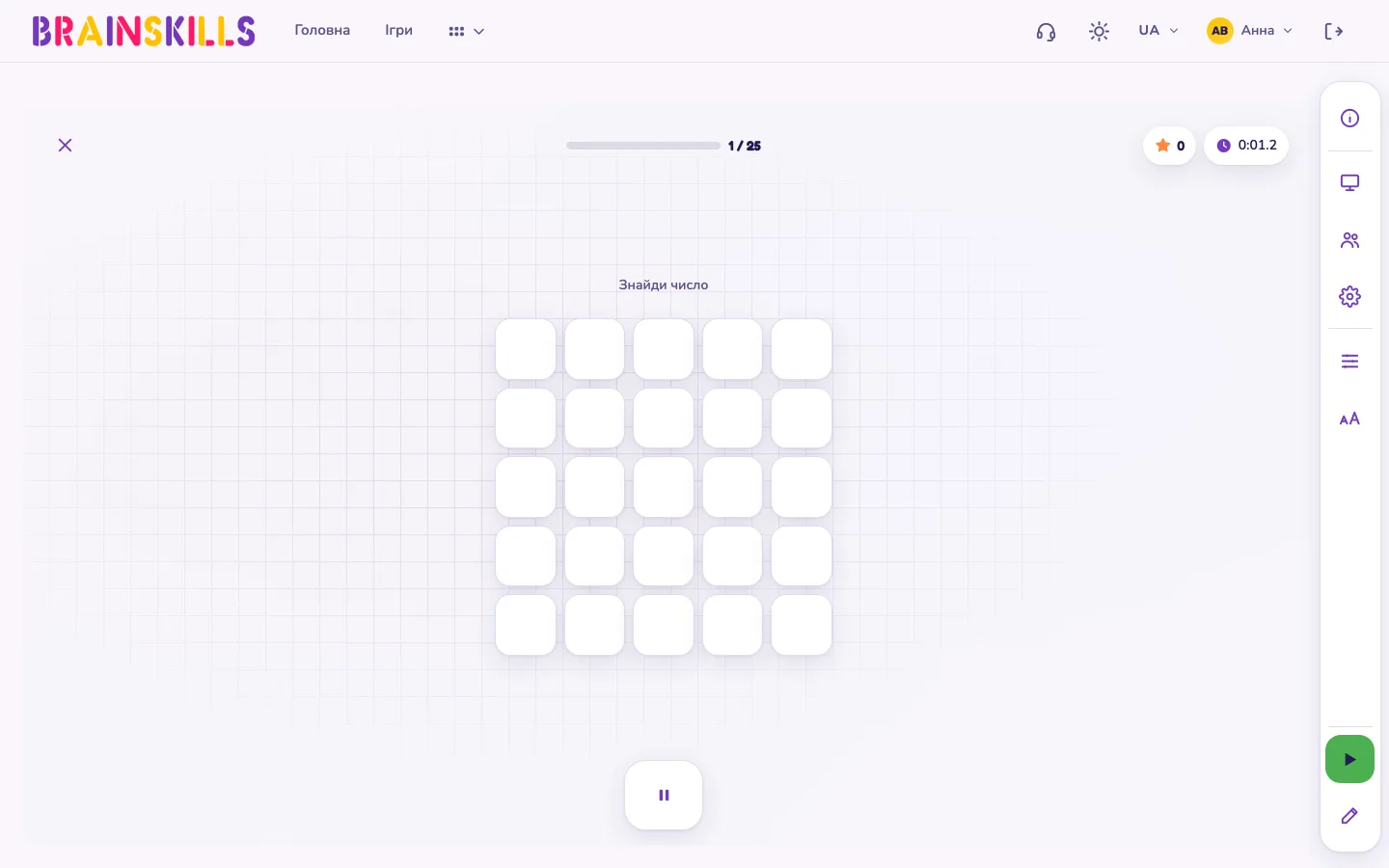
  • Schulte table trainer in the BrainSkills platform: a 5x5 number grid with timer and progress

    Schulte table 5×5

    Timer, 0/25 progress and completion percentage — the result is kept in the practice history

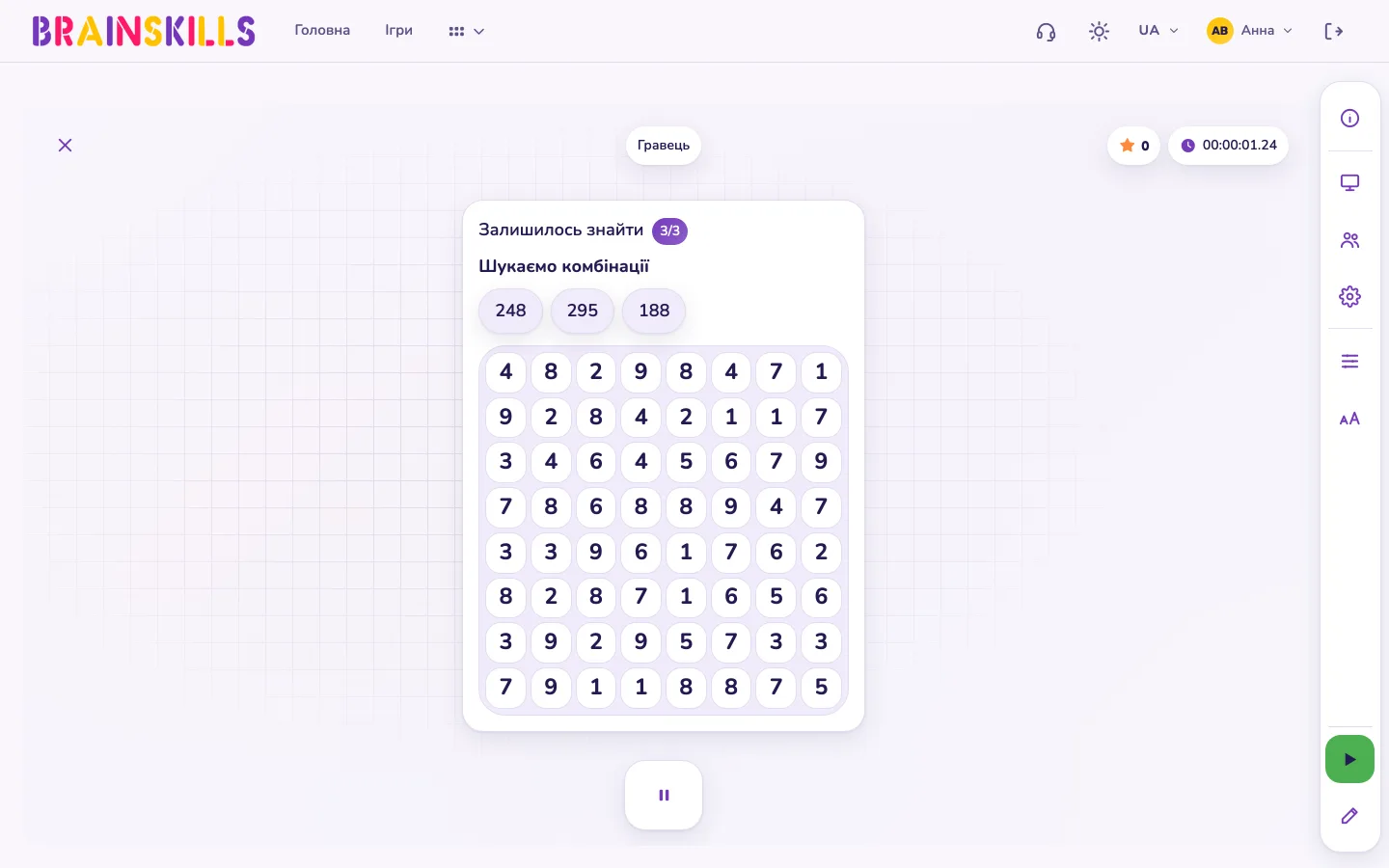
  • BrainSkills number search trainer: a digit grid with combinations to find

    Combination search

    Find the given numbers inside a grid of digits — trains peripheral vision the same way Schulte tables do

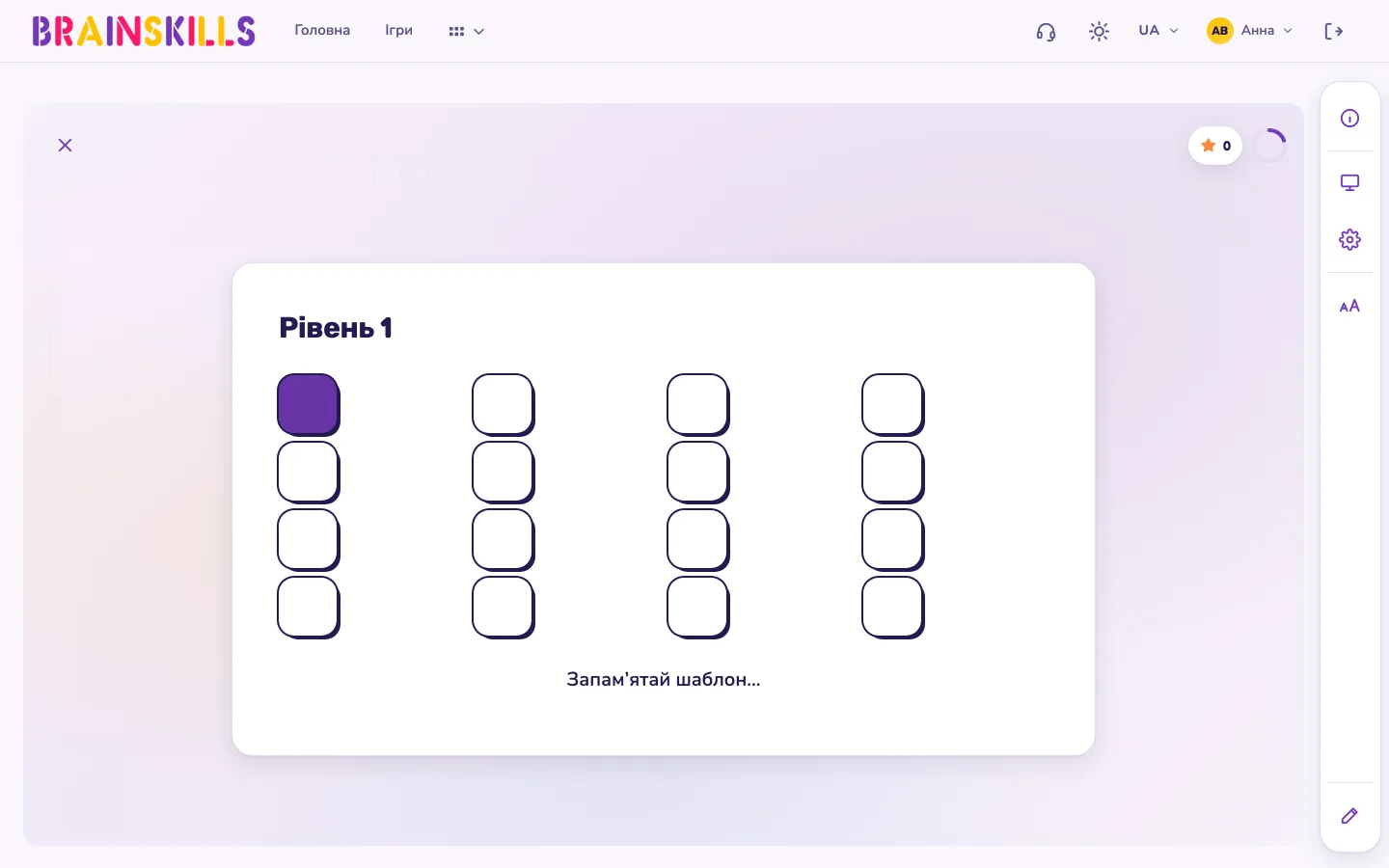
  • BrainSkills memory matrix trainer: a grid of cells to memorise

    Memory matrix

    Memorise the highlighted cells and reproduce them, with levels that get harder

History & Origin

Schulte tables were developed by German psychiatrist Walter Schulte in the mid-20th century as a tool for studying attention properties.

  • Developed in the 1950s in Germany
  • Originally used in psychiatry and psychology
  • Now widely used in education
  • Proven effectiveness in scientific studies

How They Work

A grid of randomly arranged numbers that must be found in order. Trains peripheral vision and attention switching speed.

Standard grid size
5×5
Numbers to find
25
Target completion time
30-60s

What it trains

Benefits

How Schulte tables improve cognitive abilities

  1. Speed Reading

    Expands the visual field, allowing you to capture more words per fixation and read faster.

  2. Concentration

    Trains the ability to maintain focus on a task. Improves sustained attention and resistance to distractions.

  3. Reaction Time

    Reduces the time needed to find and process visual information. Improves information processing speed.

  4. Peripheral Vision

    Develops the ability to see and process information at the edges of the visual field without eye movement.

  5. Mental Agility

    Improves attention switching speed and mental flexibility. Trains the brain to process information faster.

  6. Academic Performance

    Improved attention and reading speed directly impact school performance across all subjects.

Speed reading

Schulte tables for reading

How an attention drill connects to reading speed, and how to use it properly

Slow reading is rarely about the eyes — it is about how many times the gaze stops on a line. A beginner makes 8-12 fixations per line and reads word by word. Schulte tables train exactly what reduces those stops: a wide visual field and the ability to hold attention in the centre while seeing the periphery.

With a table, the gaze stays in the centre and numbers are found with peripheral vision. The same skill transfers to text: instead of word by word, the eye takes in a group of words, fixations per line drop, and reading speed rises without losing comprehension.

  1. 1

    3-5 minutes as a warm-up

    One or two tables before reading. Gaze in the centre, numbers found with peripheral vision, no reading aloud.

  2. 2

    Increase difficulty gradually

    Once 5×5 is stable (children from 40-50 s), move to 6×6 and 7×7. Jumping ahead only trains haste, not skill.

  3. 3

    Move to text right away

    After the table, read for 5-10 minutes and measure speed and comprehension weekly. Without transfer to text it stays a number game.

Test your reading speed Speed reading exercises Schulte tables in class: platform for tutors

From 3×3 to 6×6

Training Progression

From beginner to advanced level step by step

  1. 1

    Beginner

    Start with a 3×3 grid (numbers 1-9). Focus on accuracy first. Target time: 15-20 seconds per table.

  2. 2

    Elementary

    Move to 4×4 grid (numbers 1-16). Practice daily for 5-10 minutes. Target time: 30-40 seconds.

  3. 3

    Intermediate

    Standard 5×5 grid (numbers 1-25). Focus on using peripheral vision. Target time: 40-60 seconds.

  4. 4

    Advanced

    Red-black tables, 6×6 grids, or letter variants. Target time under 30 seconds for 5×5.

Size and duration

Age Recommendations

Optimal approaches for each age group

Children (6-10 years)

Start with smaller grids and gradually increase. Make it a fun game with rewards for improvement.

  • Start with 3×3 grids
  • Sessions of 5-10 minutes
  • Use colorful table variants
  • Track progress with charts

Teenagers (11-16 years)

Standard 5×5 tables with progressive difficulty. Combine with speed reading training for best results.

  • Standard 5×5 grids
  • Sessions of 10-15 minutes
  • Combine with speed reading
  • Use timing for motivation

Adults (17+ years)

Full range of difficulty levels. Use for professional development, exam preparation, or cognitive maintenance.

  • 5×5 and larger grids
  • Sessions of 15-20 minutes
  • Red-black table variants
  • Integration with work tasks

Answers

FAQ

Common questions about Schulte tables

How often should I practice?

Daily practice of 5-15 minutes gives the best results. Consistency is key — short daily sessions are better than long irregular ones.

How quickly will I see results?

Most people notice improvement within 2-3 weeks of daily practice. Significant results in peripheral vision and reading speed appear after 1-2 months.

Are Schulte tables suitable for young children?

Yes, children from age 6 can start with simplified 3×3 grids. It's important to keep sessions short and game-like.

Can I practice on a phone or tablet?

Yes, digital versions work well. However, printed tables have the advantage of being the right size for peripheral vision training.

How to track my progress?

Record your completion time for each session. Create a chart to visualize improvement. Many apps have built-in progress tracking.

Do Schulte tables really improve reading speed?

Yes, scientific studies confirm that regular practice expands peripheral vision and reduces fixation time, directly improving reading speed.

Ready to Train Your Attention?

Start with our professional trainers and see results in just a few weeks

No card required. Sign-up takes a minute.