
5 Years — Play Phase
Simple, fun activities that feel like play rather than study.
- Sorting by color and shape
- Simple counting rhymes
- Finger games and songs
Brain Development
Effective exercises for developing your child's mind
A collection of proven exercises that develop memory, attention, logical thinking and creativity in children of all ages
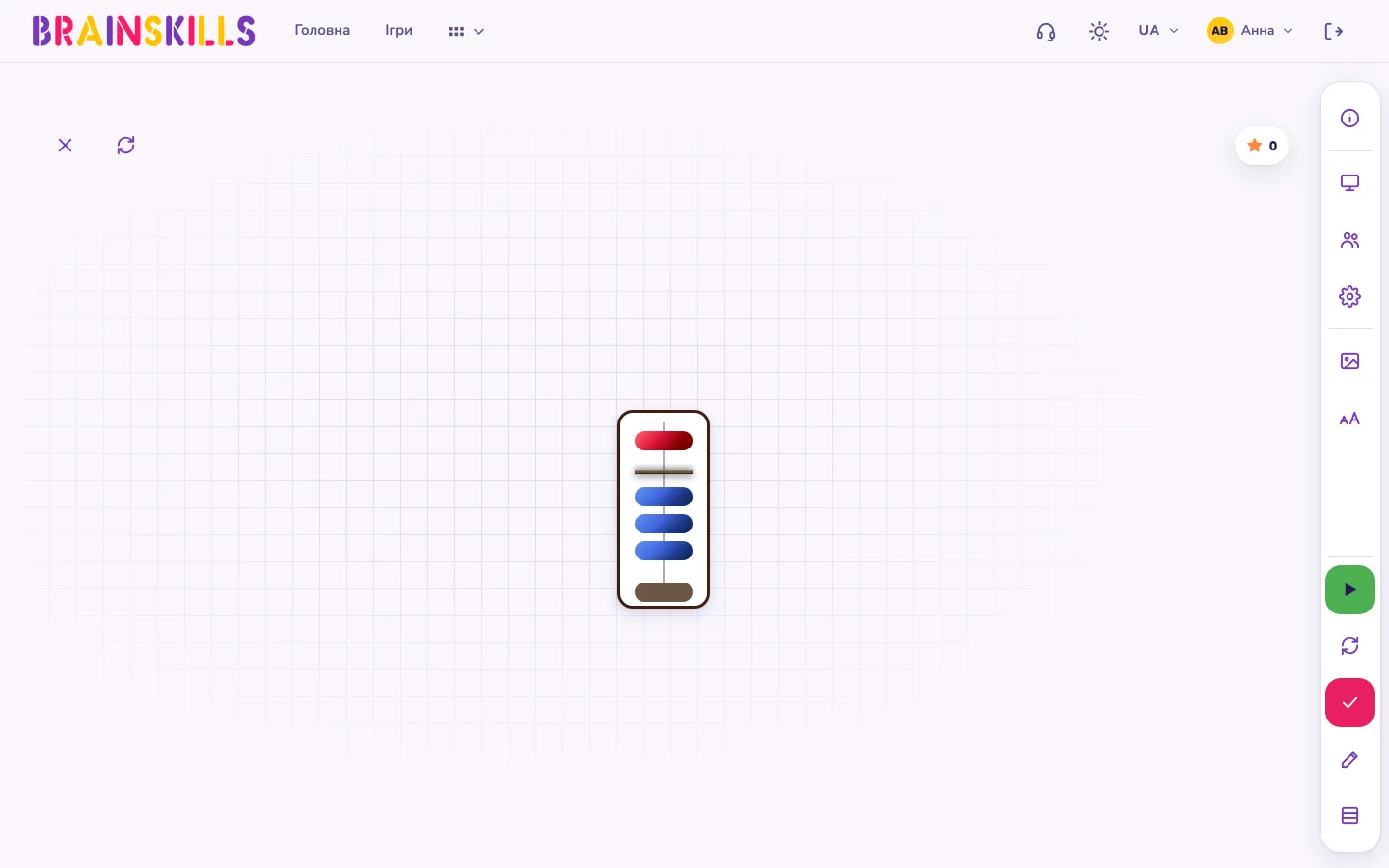
Simple exercises
Most effective exercises for brain development
Calculations in the mind without a calculator. Develops working memory, speed of thinking and mathematical abilities.
Creating mental images and manipulating them. Develops imagination, spatial thinking and creative abilities.
Various games for training short-term and long-term memory. Use visual, auditory and kinesthetic channels.
Exercises for developing concentration, attention switching and attention span in children.
Tasks that require both hands to work at the same time. Train coordination and attention.
Routine
Tips for effective brain training sessions at home
Practice at the same time daily. Regularity is more important than duration. Start with 10-15 minutes and gradually increase.
For 5-6 years: 10-15 minutes. For 7-10 years: 15-25 minutes. For 11+ years: 25-40 minutes. Take breaks between exercises.
Quiet space without distractions. Good lighting and comfortable seating. All materials prepared in advance.
By age
Choose exercises that match your child's age and abilities
Simple, fun activities that feel like play rather than study.
More structured exercises while maintaining the playful element.
Structured exercises with measurable progress and increasing complexity.
Complex exercises that challenge and develop higher cognitive functions.
Next step
Signs that your child is ready for professional training
Your child shows steady improvement in exercises and is ready for more challenging tasks and professional guidance.
The child actively asks for exercises, enjoys the process, and wants to achieve more in brain development.
Your child benefits from group activities and healthy competition, which structured programs provide.
Answers
Common questions about brain exercises for children
Daily practice of 15-30 minutes is ideal. Consistency matters more than duration. Even 10 minutes daily will show results over time.
Simple exercises can start from age 3. More structured training is effective from age 5-6. The key is matching exercise difficulty to the child's development.
Most exercises require minimal materials: paper, pencils, cards. An abacus is useful for counting exercises. Many exercises need no materials at all.
Make it fun and game-like. Track progress visually. Celebrate achievements. Vary exercises to prevent boredom. Practice together as a family.
Home exercises are a great foundation. For systematic development, a structured program with a professional trainer provides faster and more consistent results.
Quality apps can supplement practice but shouldn't replace hands-on exercises. A balanced approach combining physical materials and digital tools works best.
Ready to Boost Your Child's Brain Power?
Sign up for a free trial lesson and see the Brainskills methodology in action